Main rental charges to be paid by the tenant
Utility bills and recurring costs
Additional fees paid at the start of the lease
Maintenance, repairs and service charges
Answers to frequently asked questions about rental charges in Dubai
Renting an apartment or villa in Dubai involves much more than simply paying the annual rent. Understanding how rental charges and additional fees are split is essential to avoid unpleasant surprises and budget accurately. The rules can vary from one residence to another, but certain types of expenses come up consistently in residential leases on the local real estate market. Here is a detailed look at what falls to the tenant and the practical particularities of renting in Dubai.
Main rental charges to be paid by the tenant
Life as a tenant in the United Arab Emirates comes with several financial obligations beyond the annual rent. These notably include the municipal tax, utility bills, and other fees that should be clearly identified in a monthly or annual budget.
By understanding what makes up rental charges in Dubai, the tenant avoids any misunderstanding with the landlord when signing the lease. It's also an effective way to compare different properties available on the rental market and make an informed decision.
Annual rent and how it is paid
In Dubai, most rental contracts call for the annual rent to be paid in one to four installments, generally via post-dated cheques handed over when the contract is signed. This practice can be surprising, as it differs from customs in many French-speaking countries, where monthly payment is the norm.
It's worth noting that the average rent for a property in Dubai in 2025 varies considerably depending on factors such as the type of home or location, ranging between AED 40,000 and 60,000 a year for an unfurnished rental.
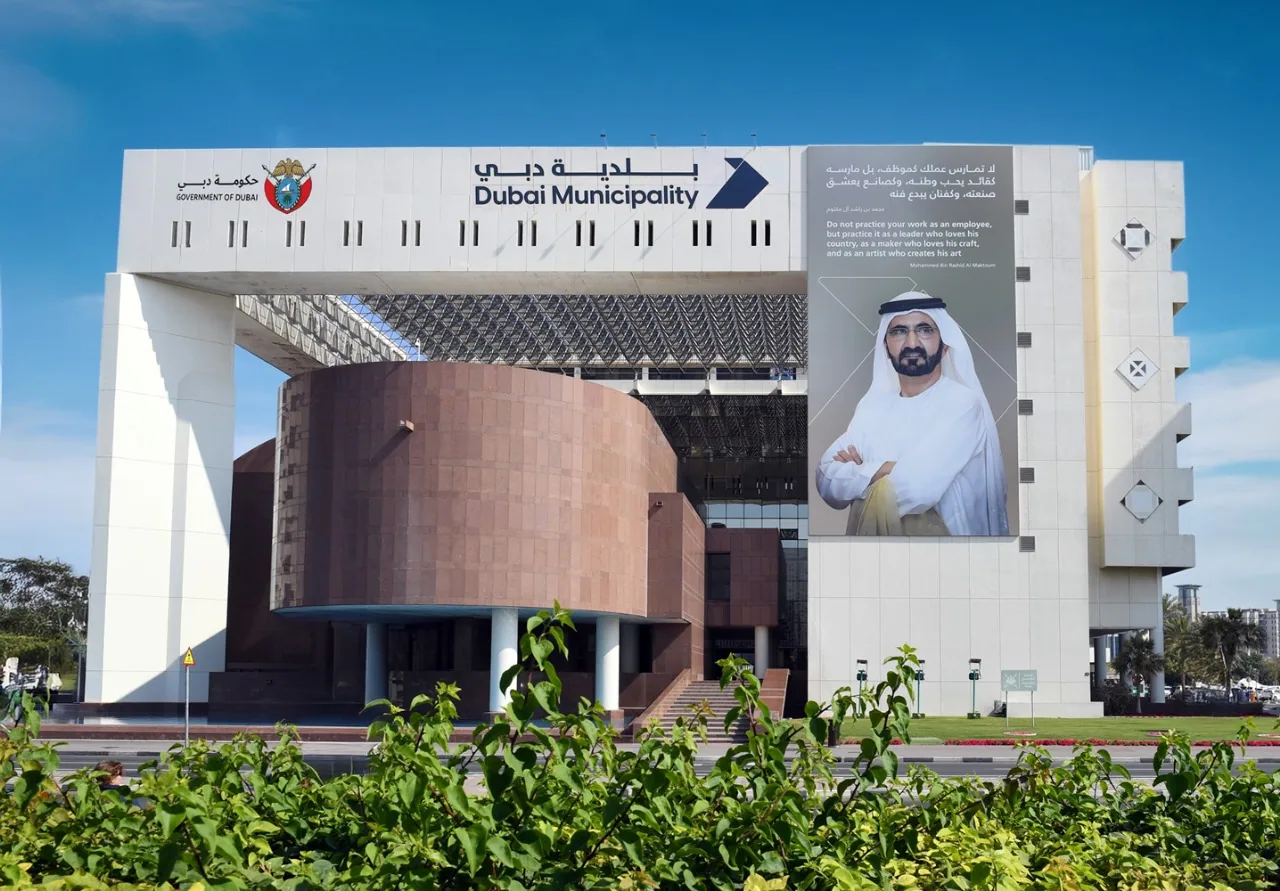
The municipal tax (housing fee) and the housing levy
As soon as they move into a home, anyone renting a property in Dubai must pay a municipal tax known as the housing fee or housing levy. This amounts to 5% of the annual rent stated in the lease and appears directly on the monthly utility bills.
This local tax funds urban upkeep and various municipal services across the city. It always falls to the tenant to pay, and is automatically added to the water and electricity bills issued each month by the official provider, DEWA (Dubai Electricity & Water Authority).
Utility bills and recurring costs
Utility bills play a key role in calculating a tenant's overall budget. They mainly cover water, electricity and air conditioning, and sometimes internet and TV depending on the residence.
New technology solutions are now making it easier to access the rental market in Dubai; for example, it is now possible to pay rent monthly in Dubai through certain platforms, an option that particularly appeals to newcomers or those who want to manage their cash flow differently.
Water and electricity: usage and billing
The tenant pays their own water and electricity costs in full, measured through individual meters. As soon as they receive the keys, they must transfer the accounts to DEWA, which requires paying a refundable security deposit returned at the end of the lease.
The cost varies depending on the size of the home, how often central air conditioning is used, and the number of occupants. Families and residents of larger homes should expect significant amounts, especially during the hot months. That said, using appliances sensibly can help keep the cost down.
Home insurance and other small recurring costs
Among the recommended annual expenses, home insurance protects against the risk of theft, fire or accidental damage in the rented apartment. While not mandatory, many landlords now require it when renting out a property.
The cost of this insurance varies depending on the value of the items covered, the size of the home and the insurer chosen. It remains negligible compared with the annual rent and provides valuable peace of mind throughout the lease.
Additional fees paid at the start of the lease
Settling in Dubai also involves one-off costs paid upfront: a security deposit, agency fees and, sometimes, administrative costs specific to certain residences or gated communities.
These fees are unavoidable and should be factored into the overall cost before receiving the keys.
Security deposit
The security deposit is generally equal to 5% of the annual rent and covers any damage found at the end of the lease. It does not earn interest for the tenant and must be returned to them, minus any repair costs.
In some upscale residences, the deposit requested can exceed this fraction, especially if the property is furnished. Taking photos when moving in and recording the property's condition are two useful safeguards for getting the full amount back after moving out without a dispute.
Real estate agency fees
Using a real estate agent in Dubai involves paying agency fees usually equal to 5% of the annual rent. These fees cover the entire search process, drafting the contract, and coordination with the Ejari registry (the official system). Payment is made only once, when the initial lease is signed.
Some landlords deal directly without an intermediary, but a professional's expertise ensures regulatory compliance and a smooth move-in or renewal process. Making sure the agency holds a valid RERA license remains essential.
Maintenance, repairs and service charges
A common question concerns who covers routine maintenance work on the home, as well as shared costs in residential towers.
Unlike in France, Emirati law specifies that the split depends on the nature of the work as well as what is written in the lease.
Who pays for routine maintenance and repairs?
The tenant generally covers all minor work and routine maintenance (regular air conditioning upkeep, replacing light bulbs, small leaks…). Major repairs due to normal wear and tear normally fall to the landlord, upon presentation of a quote or official report.
The financial limit of the tenant's responsibility for minor repairs is often set at around AED 500 per repair, but this threshold must be stated in the lease to remove any ambiguity.
Service charges and common areas
Service charges, covering security staff, 24/7 security, elevators, the pool and garden upkeep, are paid by the landlord and not the tenant, unless the contract states otherwise. This is a major benefit for occupants, who get premium services at no or very limited extra cost.
That said, some residences require partial sharing of certain costs (for example, central air conditioning fees or extra parking). Check the "rental charges" clause of the lease before signing to avoid any unpleasant surprise.
Annual rent payment: often via staggered cheques
Municipal tax / housing fee to be paid by the tenant
Individual utility bills (water, electricity)
Security deposit required at move-in
Real estate agency fees to plan for
Home insurance strongly recommended
Routine maintenance covered by the occupant
Service charges covered by the landlord, unless otherwise agreed
Answers to frequently asked questions about rental charges in Dubai
Does the tenant have to pay the municipal tax on their home in Dubai?
Yes, the municipal tax known as the housing fee or housing levy falls to the tenant. It amounts to 5% of the annual rent and appears directly on the utility bills issued each month. It is paid alongside the water and electricity bills.
Uniform rate (5%)
Billed monthly
Required to complete the Ejari file
Which utility bills does the tenant have to cover in Dubai?
The tenant pays all bills tied to their own usage, mainly water and electricity. Internet, TV and routine home maintenance may be added to this, depending on the terms of the contract. As a general guide, here is a common breakdown:
How does the security deposit work in Dubai?
A security deposit equal to 5% of the annual rent (or more for furnished homes) must be paid when signing the lease. This amount covers any damage or unpaid rent and is refundable when moving out, subject to a satisfactory property inspection. It does not earn any interest for the tenant during the tenancy.
Amount held during the tenancy
Refunded after a positive inventory check
Rate varies depending on furnishings and category
Are service charges covered by the tenant in Dubai?
In principle, service charges are the landlord's sole responsibility. Some exceptional contracts may require the tenant to contribute to certain costs (parking, shared air conditioning). It is therefore worth reading the lease carefully to check for any exceptions to the general rule.
Standard arrangement: landlord
Possible written exceptions: tenant contributes in part
A specific clause is required for any extra charge
Read also:
Setting rent in Dubai: the legal framework to know
Average rental prices in Dubai by neighborhood
Summer 2025: What to do in Dubai – Complete guide to what's new
Working in Dubai: the 2025 guide
Also on Madely Properties
Flight time between Paris and Dubai: layovers, options and tips
Dubai International: complete guide to the main airport
The role and importance of the memorandum of understanding (MOU) in Dubai real estate transactions
Air conditioning billing in Dubai homes
What minimum salary should you plan for to live decently in Dubai?