DIFC: An International Financial Hub
Investment Opportunities at the Heart of Dubai
DIFC's Economic and Cultural Impact
How do you spot a financial hub that offers both stability and growth in a booming region? The Dubai International Financial Centre (DIFC) has established itself as the leading international financial center in the Middle East, home to more than 4,000 companies and contributing 12% of Dubai's GDP. This article examines the mechanics of premium real estate investment, the tax advantages for setting up a business, and the regulatory innovations that reinforce its position as a benchmark for cross-border transactions.
DIFC: An International Financial Hub
Since 2004, the Dubai International Financial Centre (DIFC) has shaped the financial ecosystem of the MEASA region. This independent free zone operates under a legal framework based on English common law, giving companies a secure platform for cross-border transactions. Its independent jurisdiction covers 77 emerging markets representing 3.7 billion consumers.
DIFC has state-of-the-art technology infrastructure, including a dedicated fiber-optic network and the Dubai AI Campus. These facilities support transcontinental financial flows, with reduced latency for electronic transactions. Dubai's air connectivity links 240 destinations worldwide in under 8 hours.
Since its founding, the center has recorded average annual growth of 12% in assets under management. 2021 figures show 996 companies based there, including 17 of the world's 20 largest banks. The GDP generated by DIFC accounts for 12% of Dubai's economy, cementing its status as a regional pivot.
Investment Opportunities at the Heart of Dubai
Premium Real Estate: A Dynamic Market
The DIFC district offers high-end apartments, penthouses and premium offices. As shown in our analysis of Dubai real estate trends, residential values are growing 27.5% annually.
Full tax exemption on rental income and capital gains
A secure legal framework based on English common law for transactions
A strategic location at the heart of the Dubai International Financial Centre
Average annual growth of 27.5% in residential values in 2024
Our guide to choosing a property investment details the buyer protection mechanisms in place, including a centralized title deed registry. Disputes fall exclusively under DIFC's specialized courts.
The third phase of expansion will add 177 homes connected to Gate Avenue. Off-plan investments carry an expected appreciation of 40% by 2030, driven by the expansion of digital infrastructure.
Buyers benefit from exemptions on transfer fees and rental taxes. Dubai's broader tax advantages find their fullest expression here.
Starting a Business: A Favorable Ecosystem
Registering a company in DIFC takes 7 days through a digital platform. The process guarantees full foreign ownership with no minimum share capital.
Financial and technology sectors account for 68% of new entrants. FinTech startups benefit from a regulatory framework suited to digital payments and smart contracts.
The partnership network spans 30 international exchanges and 75 financial institutions. This connectivity facilitates access to African and Asian markets.
Investec and Edmond de Rothschild have grown their assets under management by 150% since setting up there. These cases confirm the hub's effectiveness for regional expansion.
Innovative Financial Services
DIFC offers private banking solutions and structured products for sovereign wealth funds. Asset managers have access to instruments spanning 120 currencies.
Blockchain platforms interoperable with MEASA and European markets
Pioneering regulation for digital assets and smart contracts
An accelerator program connecting 100+ startups with global investors
A financial AI lab dedicated to portfolio optimization
Partnerships with 30 international stock exchanges for cross-listings
The Digital Assets Law (2024) legalizes crypto transactions while requiring quarterly audits. As explored in our study on the impact of cryptocurrencies, this framework is attracting blockchain funds.
The recent arrival of Interactive Brokers, holding a DFSA license, illustrates the synergies with New York and Hong Kong. Local fintechs are developing predictive wealth management tools powered by AI.
Robo-advisor platforms are expected to account for 35% of managed assets by 2026. This shift is built on DIFC's financial big data capabilities.
DIFC's Economic and Cultural Impact
DIFC generates 12% of Dubai's GDP, with a target to double that by 2030. This contribution rests on 4,400 companies active in financial services, accounting for 52% of the emirate's foreign direct investment.
The district draws 39,000 professionals from 150 nationalities, creating a uniquely multicultural environment. Initiatives such as Future Talent Week connect 200 international universities with local employers, strengthening the region's talent pipeline.
The Sustainable Finance Catalyst is mobilizing $100 billion for green projects by 2030. This program aligns with the UAE Net Zero 2050 strategy, supporting 120 energy efficiency initiatives and 75 renewable energy projects across the MEASA region.
The Dubai International Financial Centre has cemented its position as a strategic financial hub, offering premium real estate opportunities and a competitive business ecosystem. Its favorable legal framework and double-digit growth continue to draw investors and multinationals. With further expansion expected by 2030, DIFC remains an essential lever for capturing the region's economic momentum.
FAQ
What risks come with investing in DIFC?
Investing in DIFC carries risks, including capital loss, liquidity risk and market volatility. Regulatory changes can also affect investments. It's therefore essential to stay informed of current laws and regulations.
While not specific to DIFC, investing in Dubai real estate in general carries risks, particularly around off-plan construction. It's crucial to ensure brokers are supervised by a top-tier regulator. DIFC has a robust legal and regulatory framework designed to protect investors, notably through the Dubai Financial Services Authority (DFSA).
What is the cost of living in DIFC?
The cost of living in DIFC varies considerably depending on lifestyle and housing choices. Shared housing in sought-after areas like DIFC can cost between AED 3,000 and AED 6,000 per month. For property purchases, the average price in DIFC is around €732,000, with an average price per square meter of €7,010.
The overall cost of living in Dubai is considered reasonable, though leisure spending can be higher than in other countries. For a family of four, a budget of around €2,450 (AED 10,243) per month is suggested, not including housing costs. It's worth noting that the cost of living can vary considerably depending on the neighborhood, type of housing, consumption habits and personal preferences.
How does DIFC compare to Abu Dhabi Global Market?
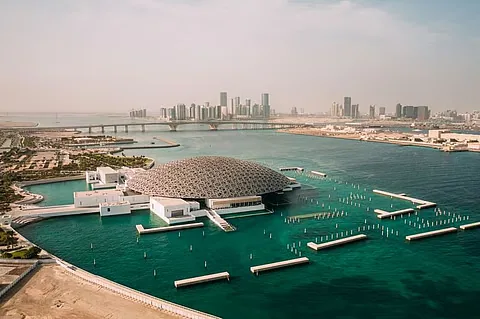
DIFC and ADGM are two distinct financial centers in the UAE, both offering services and advantages to businesses. They operate as financial free zones with independent jurisdictions. DIFC has a strong presence in traditional banking, financial advisory and wealth management, while ADGM attracts virtual asset service providers (VASPs) and sustainable finance firms.
They differ in legal framework, sector focus and appeal to different types of businesses. ADGM is overseen by the FSRA (Financial Services Regulatory Authority). DIFC offers significant tax advantages, including the absence of personal income tax, capital gains tax and corporate tax for certain funds. The choice between the two depends on a business's specific needs.
What are the job prospects at DIFC?
DIFC offers career opportunities within a major financial hub serving the Middle East, Africa and South Asia. In-demand sectors in the UAE include private banking, family offices, capital markets, commodities, risk and compliance, real estate finance and private equity.
DIFC Authority offers career opportunities, and LinkedIn regularly features job openings at DIFC. GulfTalent.com presents DIFC as a top destination for financial services companies thanks to its modern legal, regulatory and physical infrastructure. The UAE attracts many expatriates seeking employment, including in Dubai.
How does DIFC handle regulatory compliance?
DIFC manages regulatory compliance through a robust legal and regulatory framework. The Dubai Financial Services Authority (DFSA) is the independent regulator for financial services conducted in or from DIFC. It was established in 2004 to provide a sound, transparent regulatory framework.
DIFC has its own set of civil and commercial laws and regulations, separate from the UAE's legal system, based on English common law. DFSA sets regulations for virtual assets issued for investment purposes, ensuring licensees remain compliant. A regulatory and supervisory framework is in place to ensure AML/CFT (anti-money laundering / counter-terrorism financing) compliance for virtual assets.
Read also:
Working in Dubai: the 2025 guide
Retiring in Dubai: 0% Tax and the 5-Year Visa
The DIFC district: a prestigious, bustling business hub
Summer 2025: What to Do in Dubai – A Complete Guide to What's New