No annual property tax on ownership
DLD fees: 4% of the property's value at purchase
Municipal tax ≈ 5% of rental value (occupants/landlords)
Payment in dirhams via certified check or DLD transfer
Net tax advantage compared with French markets
Investing in real estate in Dubai offers an attractive tax framework with specific rules that are essential to understand. Unlike French-speaking markets, property tax, property transfer fees and DLD fees management all have distinct characteristics. To ensure a smooth purchase, it's crucial to find out about the percentage-of-value amounts, one-off taxes, how they're calculated, and the administrative payment obligations.
Understanding the concept of property tax in Dubai
In Dubai, the classic concept of a recurring property tax, as found in France, does not exist. This absence is a major advantage of the local real estate market and partly explains its appeal to foreign investors. As such, the absence of a recurring property tax is a fundamental factor when assessing the overall long-term profitability of a real estate investment.
That said, several related mechanisms govern the transfer of ownership, renting out or occupying a property. It's worth exploring these mechanisms, such as property registration fees, the municipal tax on rental value, or the tax on annual rent.
The various costs involved in buying a property
When an investor wants to buy an apartment or villa in Dubai, several one-off fees are required by the regulatory authorities to ensure transparency and security in transactions. These charges are only due at the time of a change of ownership, which differs significantly from the annual contribution imposed in many Western countries.
Among the notable advantages of the local system, it's worth highlighting that neither an annual property tax nor an urban tax weighs on owning property in Dubai. This greatly simplifies understanding the tax system for international investors.
What are the main fees involved in a purchase?
The list of unavoidable costs includes:
Property transfer fees (DLD): generally set at 4% of the declared purchase price, these include the cost of official registration with the Dubai Land Department.
Property registration fees: these cover the legal formalization of the transaction through registering the new owner in the official records.
Notary fees: depending on the complexity of the deal, these provide extra legal security for the contract, but are not always required.
The existence of these fees, calculated as a percentage of the property's value, replaces an annual property tax, simplifying financial planning for any French-speaking investor looking to commit in the medium or long term.
What share do DLD fees represent in the transaction?
DLD fees make up the main cost when transferring ownership of a new or resale property. In practice, the percentage of the property's value generally reaches 4%, sometimes split between buyer and seller depending on the contractual agreement. This is a one-off, non-recurring payment, handled directly by public institutions.
For those torn between different types of investment, it can be worth comparing buying a traditional apartment with other products such as a condo-hotel, since this distinction also affects the nature of the fees and taxation involved; on that note, there are clear tax differences when comparing an apartment investment in Dubai with buying a condo-hotel.
Payment terms and practical aspects
Everyone involved in a property sale in Dubai must follow a regulated procedure set up by the official authorities. The crucial step is paying all mandatory fees at the right time, a prerequisite for obtaining the final documents proving full ownership.
The Dubai Land Department administration provides all the information the buyer needs to properly meet their financial obligations. Payment is made online or in person to speed up getting the property certificate.
How do you pay the property transfer fees?
To finalize this transaction, the buyer must present the signed sales deed along with bank proof of the transfer of the DLD fees and the property registration fees. The full amount must be paid before any official request for title transfer.
Payment is usually made in dirhams, via a certified check or direct transfer to the Dubai Land Department's account. How quickly it's processed depends on the payment method chosen as well as how complete the file provided by the buyer and their intermediary is.
What about the municipal tax for owners and tenants?
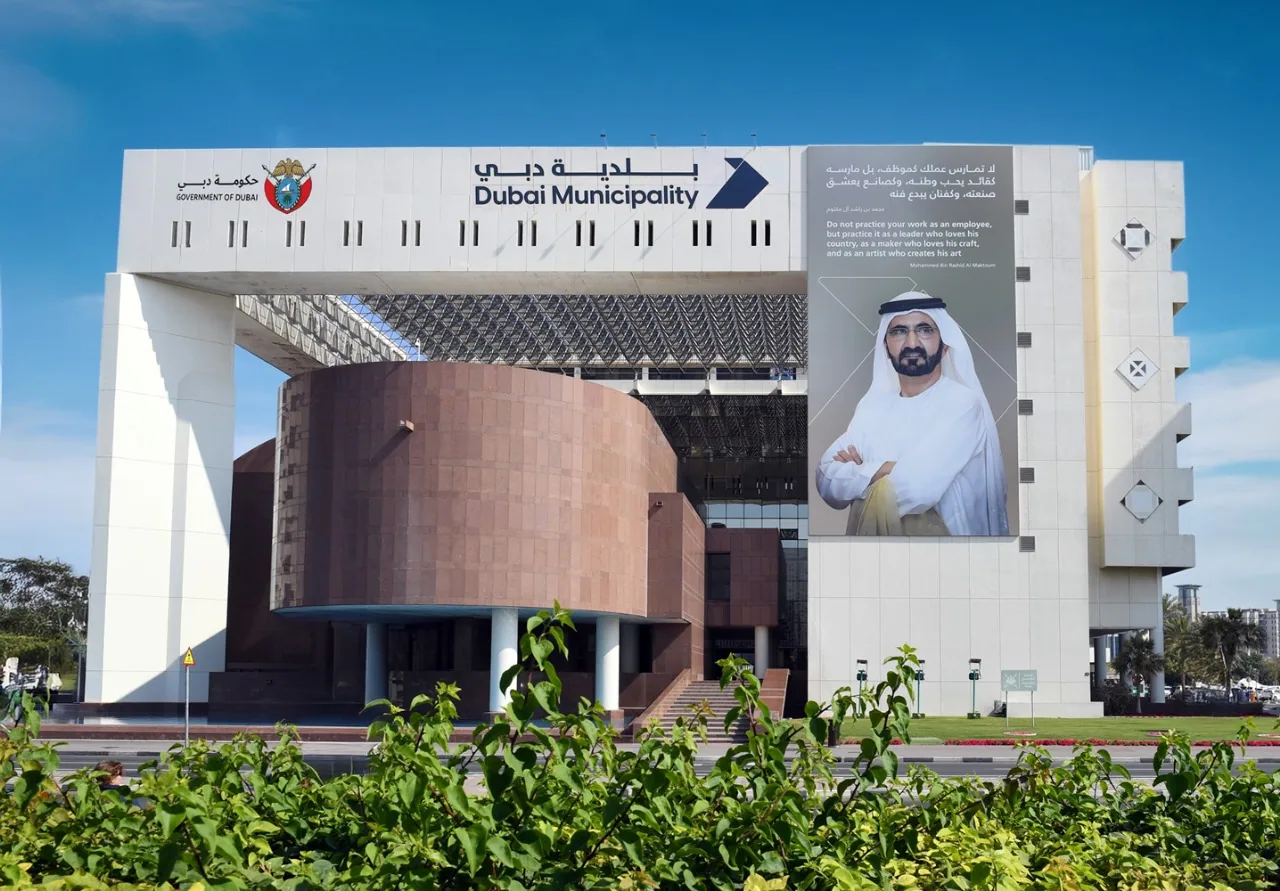
While there is no annual property tax on owning a property, a municipal tax based on the gross rental value still applies. It mainly affects resident occupants and landlords, with an automatic monthly deduction added to the electricity bill (DEWA).
Its rate is around 5% of the annual contractual rent value, generally paid by the tenant in most cases. This tax specificity should be factored into any rental yield calculation or property investment plan in Dubai.
Comparing property taxes: Dubai versus French-speaking markets
In most European countries, owning or transferring real estate generates annual taxation and high transfer duties. Compared with these systems, Dubai's model stands out for its considerably lighter long-term tax burden.
The table below shows the main differences for any potential European investor considering Dubai's real estate market.
This tax regime attracts many investors looking to combine low taxation with dynamic growth in property value.
Frequently asked questions about property tax in Dubai and related real estate fees
Is there a recurring property tax in Dubai?
No, there is no recurring property tax in Dubai, unlike in other European countries. However, one-off fees are required at the time of purchase, including in particular property transfer fees and property registration. This is a real advantage for investors seeking stable, predictable annual costs.
No annual tax linked to owning the property
Only one-off fees when buying
What amounts should you budget for DLD fees and related costs?
DLD fees correspond to 4% of the percentage-of-value amount for the property. Added to this are property registration fees, often included in this rate, as well as any minor notary fees. In total, you should plan for:
4% in DLD fees on the purchase value
Minor administrative fees (under 1% of the price)
How is the municipal tax on rental value calculated?
The municipal tax corresponds to 5% of the annual rent value stated in the registered rental contract. This amount is paid monthly on top of the DEWA energy bill. In most cases, it's the tenant who pays this amount to the local authorities.
Rate set at 5% of the annual rent
Automatic deduction with the electricity bill
Are there any possible discounts or exemptions on real estate fees in Dubai?
In some cases, promotional offers from developers allow for a temporary reduction in property transfer fees, especially during special events or commercial launches. Some specific profiles may also qualify for a partial exemption under bilateral agreements or particular conditions.
Promotions on DLD fees during certain real estate fairs
Possible negotiation over who covers the cost between buyer and seller
Read also:
Is there a property tax in Dubai? Understanding local real estate taxation
Negotiating real estate fees in Dubai: tips and limits for optimizing your investment
Working in Dubai: the 2025 guide
Retiring in Dubai: 0% Tax and the 5-Year Visa
Also on Madely Properties
Rental charges in Dubai: what the tenant must pay
Residents of Dubai: what are they called and what's their way of life
Does buying property automatically grant a right of residence?
Lease agreements in Dubai: important clauses and protections for tenants and landlords
What salary do you need to live comfortably in Dubai in 2025?