Current real estate market dynamics
Price analysis and trends
Investment opportunities
Regulatory aspects
Strategic outlook
Analyzing downtown Dubai's real estate market calls for a close look at current dynamics, from record transaction growth to valuation gaps between neighborhoods. This article breaks down the key indicators for 2024, from prices per m² in Business Bay to landmark projects near the Burj Khalifa, shedding light on opportunities for foreign investors. Exclusive data on rental yields, post-pandemic trends and regulatory advantages provides a roadmap for investing in Dubai real estate.
Current real estate market dynamics
Dubai's real estate market posted exceptional performance in 2024, with 2.78 million transactions recorded, including sales and rentals. Mortgage lending grew 41%, according to recent sector report data. Prices reached AED 1,473 per square foot in October 2024, 20% above the previous 2014 record. The latest 2024 projections offer a detailed analysis of recent trends and forecasts for Dubai's real estate market.
Downtown is structured around strategic neighborhoods:
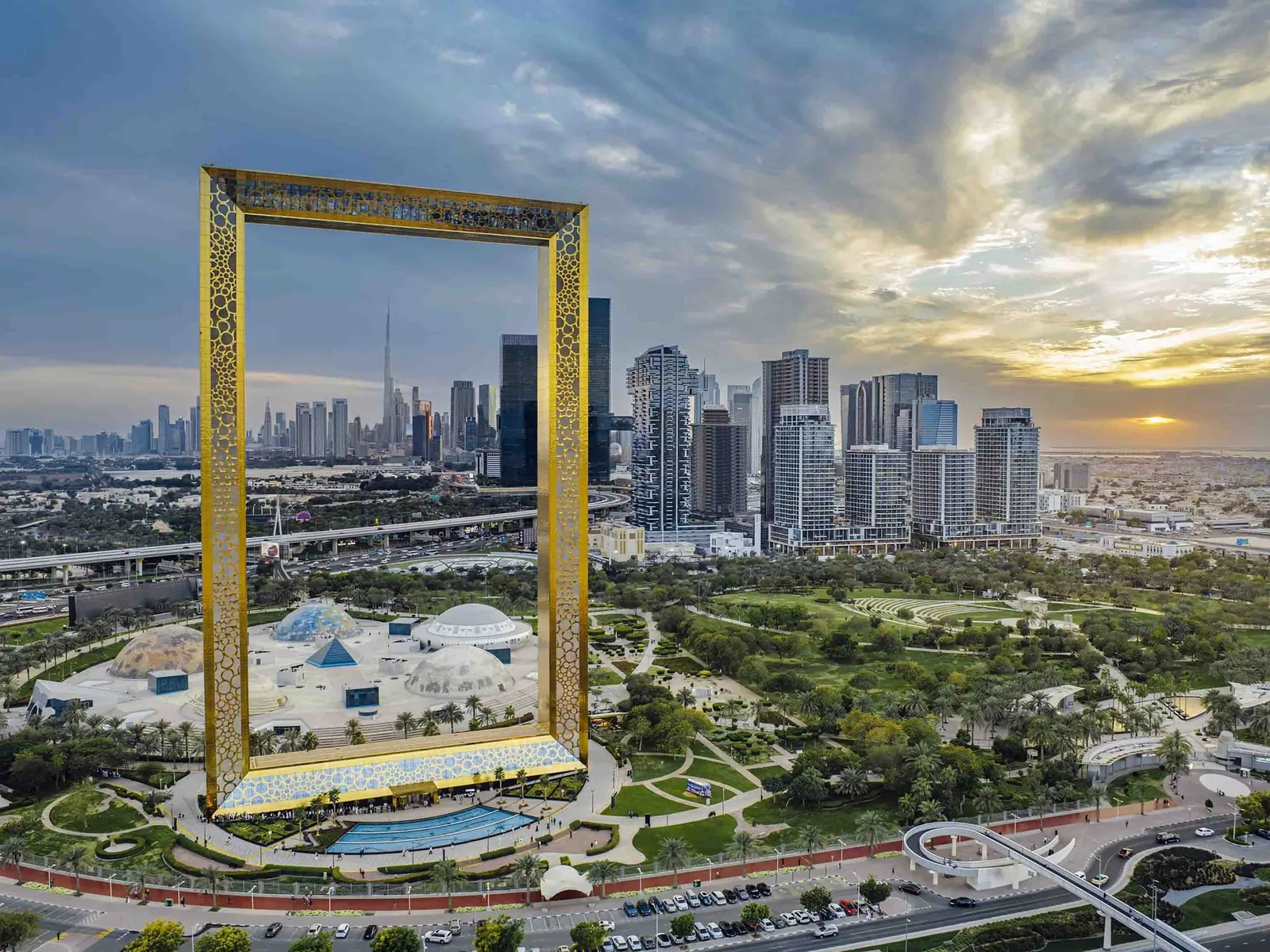
Downtown Dubai: the urban epicenter, home to the Burj Khalifa and Dubai Mall, with a concentration of high-end residences and tourism infrastructure
Business Bay: a mixed-use neighborhood combining corporate headquarters with modern residential complexes right next to the historic center
Dubai Marina: a coastal area known for its residential towers with gulf views and leisure amenities
Jumeirah Village Circle: a developing sector incorporating family-oriented real estate projects and green spaces
Burj Khalifa District: an international draw, concentrating premium properties with views of the iconic landmark
Comparative analysis reveals a significant valuation gap: Business Bay averages $6,710/m², compared with AED 20,020/m² in Downtown Dubai. This difference is explained by the density of cultural and commercial infrastructure in the Burj Khalifa area.
Construction projects launched since 2020 favor advanced technology and environmental certifications, with 69.83% more launches compared with 2020. Palm Jebel Ali illustrates this trend with its concept of interconnected islands.
Tourist appeal is putting pressure on residential demand: prices around the Burj Khalifa have risen 21% since 2022. The Mall of the World, under development, reinforces this momentum with its integrated retail offering.
Price analysis and trends
Rent trends in Dubai are driven by an influx of 89,000 expatriates in 2023, generating rental pressure of 16% on average. Central neighborhoods such as Dubai Marina have seen increases of up to 28.8% for apartments, according to third-quarter 2024 data.
Projections point to moderate annual growth of 3.5% to 5% through 2026, despite the expected arrival of 41,800 new units in 2025. The Sustainable City neighborhood illustrates this trend, with a 26.36% increase since 2021, rising from AED 19,398/m² to AED 24,511/m².
Average rental yields of 6% in Dubai far outpace London (2.7%) and Paris (2.9%), according to the latest comparative analyses. This gap widens in tourist areas, with peaks of 8%.
Current mortgage rates range between 4.5% and 6.5% for non-residents, affecting access to credit. Loan-financed sales accounted for 34% of transactions in 2024, down from 42% the previous year.
Investment opportunities
Primary residences
Dubai Marina accounts for 62% of demand for family apartments of 70 to 125 m². These properties offer direct access to international schools and green spaces, with average prices of AED 2.9 million. Foreign buyers benefit from a full exemption on income and capital gains tax under the free-zone regime.
New construction has systematically incorporated LEED or Al Sa'fat certification since 2022, cutting energy consumption by 30%. This shift responds to the demands of European and Asian buyers, the main seekers of sustainable housing.
Rental investments
International City and Dubai Sports City post gross rental yields of 8%, compared with 5.7% in Dubai Marina. Short-term rental platforms generate up to AED 1.5 million a year for penthouses near the Burj Khalifa, despite strict regulations limiting rentals to a 6-month minimum outside designated zones.
Management fees for non-residents include a 5% agency commission and AED 1,200/month for maintenance. 40% of tenants come from the European Union, favoring annual contracts with concierge services.
High-end market
Palm Jumeirah dominates the luxury segment, with penthouses averaging AED 4 million, featuring private pools and access to exclusive marinas. Villas with beach club access have seen prices rise 15% annually since 2022.
65% of buyers in this segment are international investors, mainly from Russia (22%), the United Kingdom (18%) and China (15%). Tailored services (24/7 concierge, private spa) drive 78% of premium transactions.
Future projects
The 2025 pipeline includes 12,000 residential units in Dubai Hills and 8,400 in Dubai Creek Harbour. These projects incorporate advanced smart-home systems and self-repairing materials, cutting maintenance costs by 40%.
The Dubai Urban Plan 2040 triples urban green space, boosting the appeal of mixed-use complexes combining residences, offices and malls. Marsa Al Arab illustrates this trend, with 4 km² of coastal development including 2,000 residential units.
Regulatory aspects
Legal framework
Free zones allow full foreign ownership without a local sponsor across 45 designated sectors. Outside these areas, non-residents must partner with an Emirati partner holding 51% of the capital. The Dubai Land Department oversees every transaction, with a fraud rate below 0.3% since 2020.
Buying property involves 7 key steps: selecting a property in an authorized zone, a preliminary agreement, a 10% deposit, securing a loan if needed, transfer at the DLD, payment of the 4% fee, and final registration. Double taxation is avoided through 102 international treaties ratified by the UAE.
RERA regulates service charges (AED 5.96/sq ft in Dubai Marina) and publishes annual reference rent indices. Its Mollak system has digitized 92% of administrative processes since 2023.
Taxation
The absence of tax on capital gains and rental income is the main advantage. Transaction fees total 6.5% on average (4% transfer fees, 2% agency commission, 0.5% technical fees).
A 5% VAT applies only to commercial properties and related services. Offshore companies in zones such as Jebel Ali can cut management costs by 40%, thanks to a corporate tax exemption below the AED 375,000/year threshold.
Visas
The Taskeen program grants a 3-year residency visa for any investment exceeding AED 750,000. The decade-long Golden Visa requires AED 2 million in debt-free property, with unlimited family sponsorship.
Renewal requires a minimum stay of 183 days a year and a medical exam. Holders benefit from priority access to public services and extended inheritance rights, cementing Dubai's position as a strategic real estate investment hub.
Strategic outlook
The 50 megaprojects announced for 2025 are expected to generate 8% annual appreciation in adjacent neighborhoods. Mall of the World, for instance, plans 300,000 m² of retail space adjoining 5,000 premium residences, reshaping the map of land values for the long term.
The market is adapting to new post-Covid expectations, with 73% of buyers favoring outdoor space and built-in health features. Demand for villas with a garden has tripled since 2020, while minimum apartment sizes have grown 15% on average.
Asset tokenization is digitizing transactions, attracting $200 million in tech investment in the first half of the year.
New investors should prioritize mixed-use neighborhoods such as Dubai Creek Harbour, where the Dubai Urban Plan 2040 guarantees at least 12% appreciation over 5 years. Sector diversification and multimodal access remain key criteria for securing investments.
Downtown Dubai's real estate market shows sustained growth, driven by record transactions and rental yields exceeding 6% in flagship neighborhoods such as Downtown Dubai and Business Bay. Tax advantages, combined with urban megaprojects and regulatory innovations, position this sector as a strategic lever for international investors. A promising trajectory is taking shape with the Dubai Urban Plan 2040, reinforcing the lasting appeal of Dubai real estate.
FAQ
What are the risks of investing in Dubai?
Investing in Dubai carries risks, including real estate market volatility influenced by oil prices and geopolitical tensions. A thorough understanding of the market is therefore needed to minimize these risks.
Despite strict laws, there is a risk of fraud. It's advisable to use certified real estate agencies. Market saturation and regulatory changes can also affect rental yields. Thorough research and a good grasp of local regulations are therefore important.
How can you finance a property purchase in Dubai?
Several financing options are available for buying property in Dubai. A bank mortgage is common, with local and international banks offering loans to buyers. Direct, interest-free financing from the developer is also a possibility. Islamic finance offers Sharia-compliant mortgages.
Buyers can also use their own funds. In 2024, falling interest rates are boosting demand for mortgages, with more than 60% of purchases financed by credit in the third quarter.
What's the property purchase process in Dubai for a foreigner?
The property purchase process in Dubai for a foreigner is straightforward. A valid passport is enough to get started. After choosing a property, a sale agreement is drawn up with a deposit paid. A bank account in Dubai is required to finalize the transaction.
The property transfer takes place at the Dubai Land Department, with fees of around 4% of the purchase price. Foreigners can acquire properties on a freehold or leasehold basis in designated zones. The transaction takes 4 to 15 days on average.
How do you choose the best neighborhood to invest in real estate in Dubai?
Choosing the best neighborhood to invest in in Dubai should factor in rental yield. Downtown Dubai offers a yield of around 5.43%. Dubai Marina is also appealing, with yields of 7 to 8%. Other areas, such as Dubai Silicon Oasis (9.5%) and Jumeirah Village Circle, are also worth considering.
These neighborhoods stand out for their specific strengths. Downtown Dubai is dynamic, Dubai Marina is in high demand, Dubai Silicon Oasis posts the best yields, and Jumeirah Village Circle favors short-term rentals.
What local taxes apply in Dubai?
Dubai is seen as a tax haven, but certain local taxes do exist. A 9% corporate tax applies to profits of companies outside free zones exceeding AED 375,000. A 5% VAT has been in effect since 2018 on most goods and services.
A municipal tax on rentals is levied (10% for commercial premises, 5% for residential). A 4% property transfer fee applies on purchase. There is generally no personal income tax, nor any property tax.
How can you find a tenant in Dubai?
To find a tenant in Dubai, you can use real estate agencies. They offer full support. Several French-speaking agencies are present. Rental listing sites offer apartment and villa rental listings. You'll find furnished homes there for both short- and long-term rentals.
Rentals are generally on one-year renewable contracts. All leases must be registered with the Real Estate Regulatory Authority (RERA). It's important to set your budget and preferred neighborhood, check listings, view properties, and negotiate contract terms.
Read also:
Working in Dubai: the 2025 guide
Retiring in Dubai: 0% Taxation and a 5-Year Visa
Best family-friendly residential areas in Dubai
Summer 2025: What to Do in Dubai – A Complete Guide to What's New
Read also on Madely Properties
Mirdif: a residential neighborhood popular with families
The Dubai Creek Tower
Services included in residential complexes in Dubai
What makes millennials well-suited to working in Dubai's real estate sector?