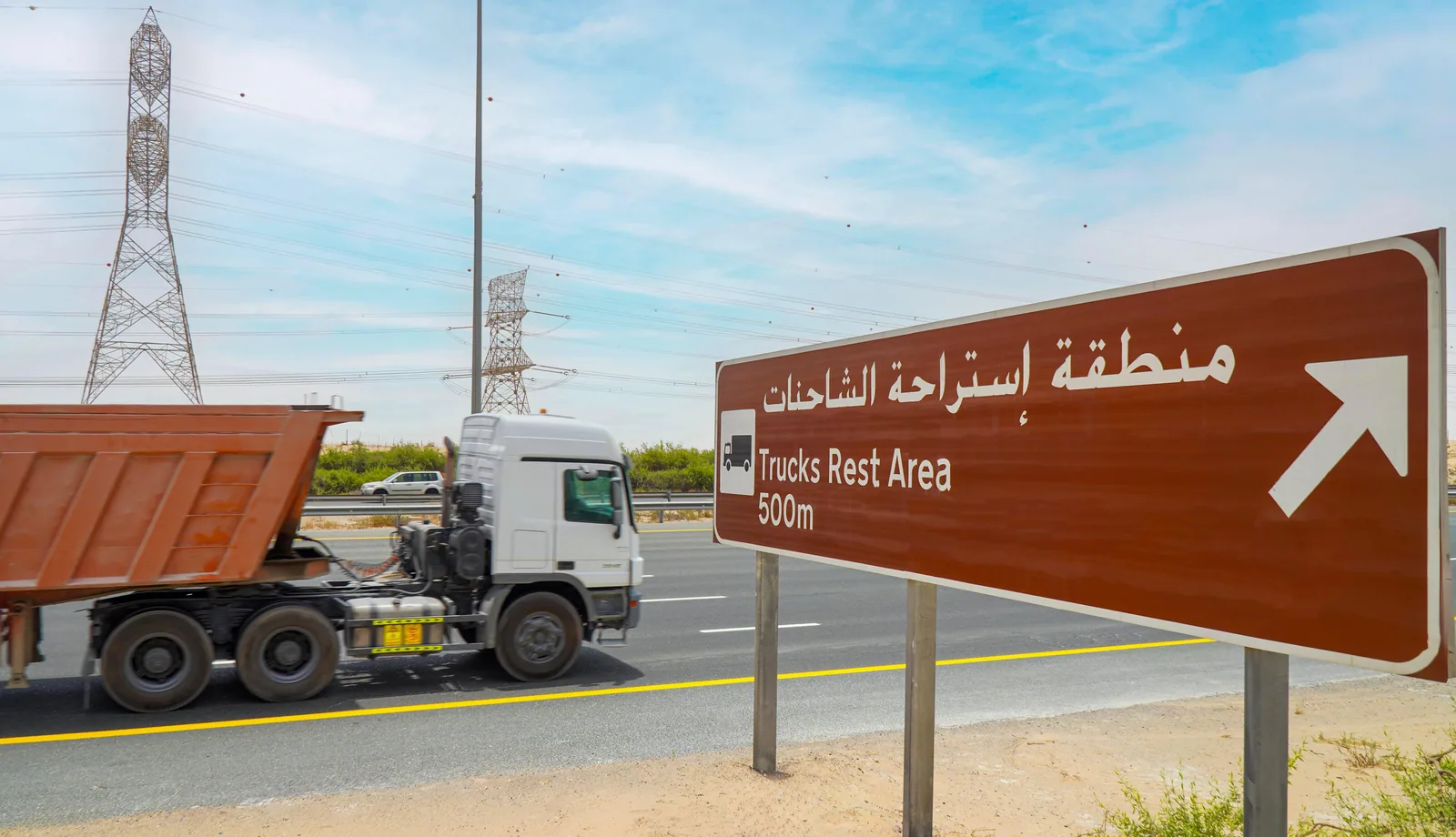
Dubai’s Roads and Transport Authority (RTA) and Dubai Police introduced expanded truck-movement restrictions on 1 October 2026, targeting peak-period traffic on key roads across the emirate. Emirates Road is exempt from the measures.
The policy is intended to support smoother traffic flow, reduce congestion and improve road safety by limiting heavy-vehicle pressure at busier times. Independent reporting confirmed that the controls include peak-hour restrictions on Sheikh Zayed Road, one of Dubai’s principal commuting corridors.
For apartment buyers, transport conditions remain an important part of assessing a neighbourhood beyond the property itself. Measures designed to separate freight movements from the busiest travel periods can support a more comfortable daily experience for residents travelling to workplaces, schools, retail destinations and leisure areas. The practical effect on an individual journey will still depend on the route, time of day and compliance with the new rules.
The restrictions are also supported by freight infrastructure. RTA has completed 14 of 16 planned truck rest stops and expanded capacity at seven facilities to 1,007 spaces. This provides designated capacity for heavy vehicles while the road network manages demand during peak periods.
For investors, the initiative is another example of active urban management underpinning Dubai’s livability proposition. While it does not determine property performance, more closely managed mobility and road-safety conditions can add useful context when evaluating residential locations near major commuting routes. Buyers should consider the applicable road schedules and their own regular travel patterns when comparing communities.